Sculpture Parks usually feature capital “A” art by famous (aka look-but-don’t-touch) artists. Or, in the case of Bryce Canyon and Grand Canyon and Tiger Leaping Gorge…the original artist, Nature.
We visit those places expecting to be awed, and walk around, mouths agape in AWWW!
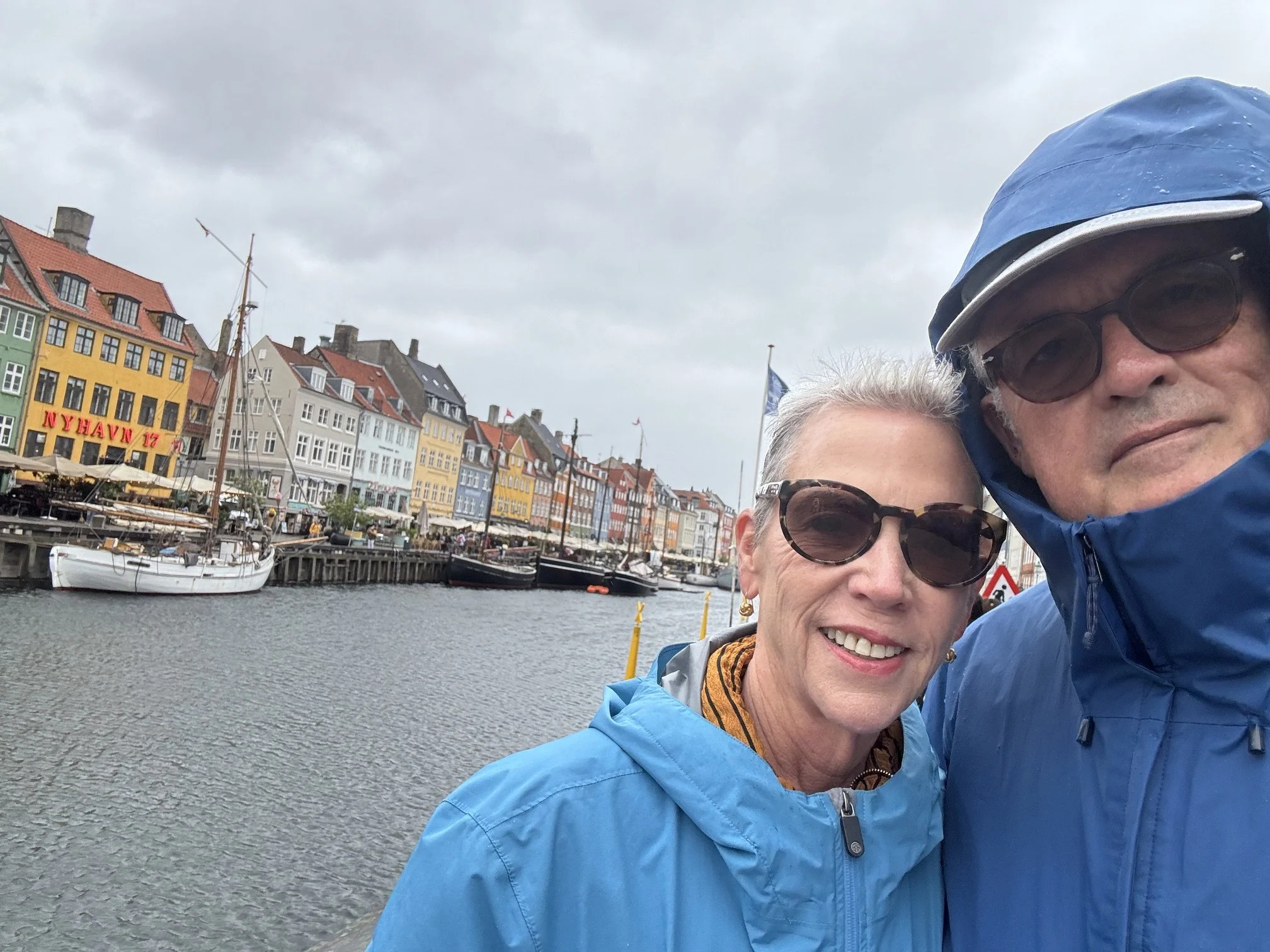
This summer Curtis and I cycled around 8 countries ringing the Baltic Sea: Sweden, Finland, Germany, Poland, Denmark, Lithuanian, Latvia, Estonia, and the Netherlands.
We cycled in and around many parks, gardens, museums, seasides—often with mouths agape (yes, lots of insect protein was ingested.)
Of course there were endless Awe moments… And sooooo many tasty meals. And smiles to be had and shared all along the way.
But only one, rather than stretching my mouth into that expected, anticipated O of wonder, turned it instead to an upturned, eye-crinkling, cheek-stretching smile.
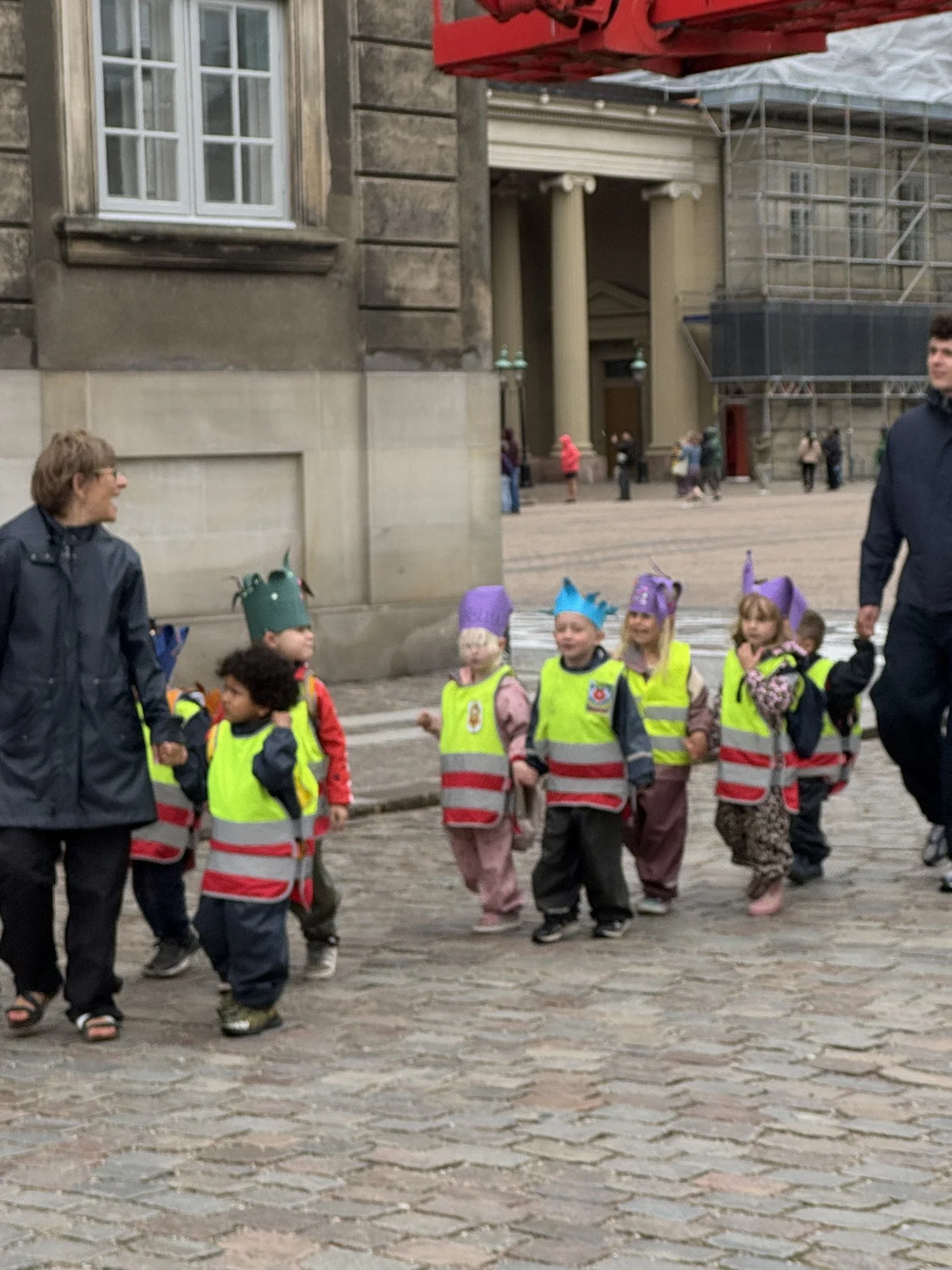
Who wouldn’t smile at these crowned cherubs walking across the Copenhagen courtyard on their way to view the changing of the guard.
Maybe one of them is a Royal in training…
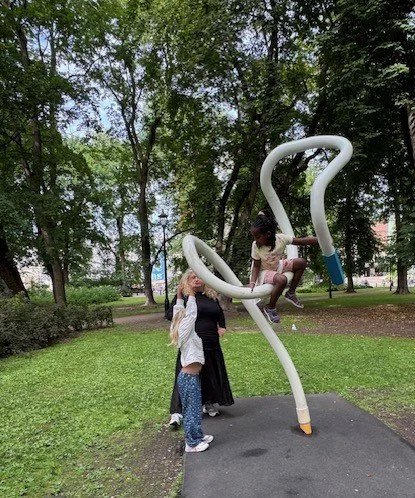
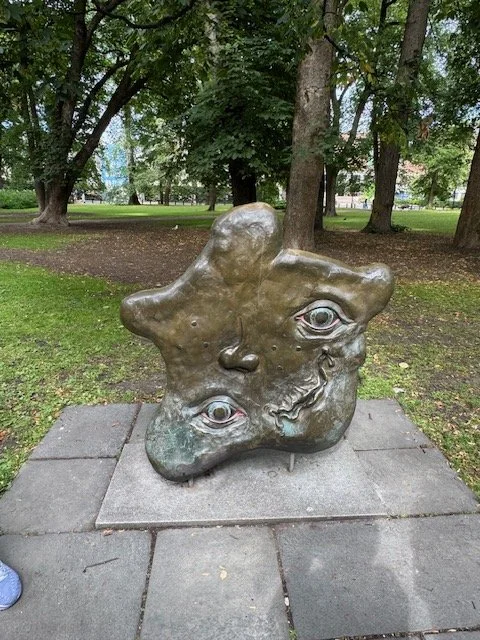
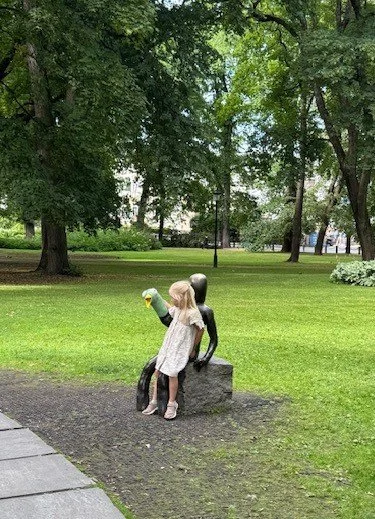
But it was a chance stroll through Princess Ingrid Alexandra's Sculpture Park, part of Oslo’s Palace Park that brings those cheek-splitting smiles.
In 2016, to mark the 25th anniversary of King Harald V’s accession to the throne and Queen Sonja’s reign, welcomed visitors to Princess Ingrid Alexandra’s Sculpture Garden. It was funded by the Savings Bank Foundation DNB and initiated by the Royal Family.
Princess Ingrid Alexandra’s Sculpture Park is the result of a contest. Norwegian 5th and 6th graders were asked to design and draw creations they imagine would be featured in the park of their dreams.
Princess Ingrid Alexandra personally selected each design that would be recreated—in all it’s playground worthy glory.
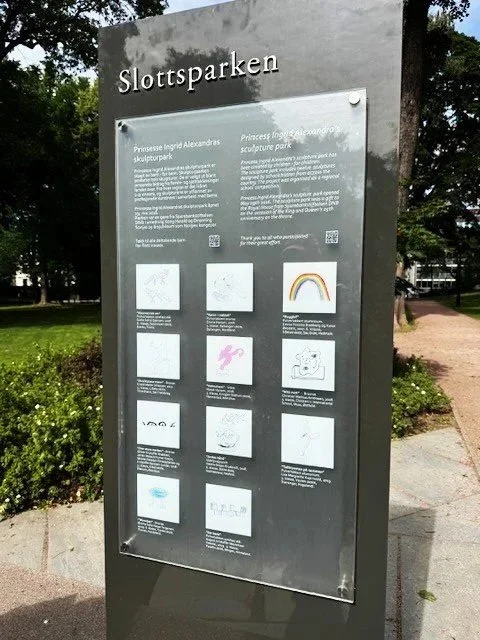
The title of the eleven selected designs, along with the student-artist’s name and grade are listed on this commemorative sign. The name of each sculptor is at the base of the sculptures.
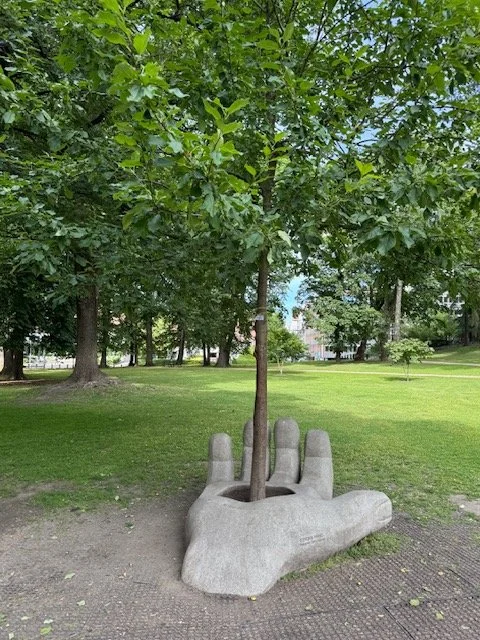
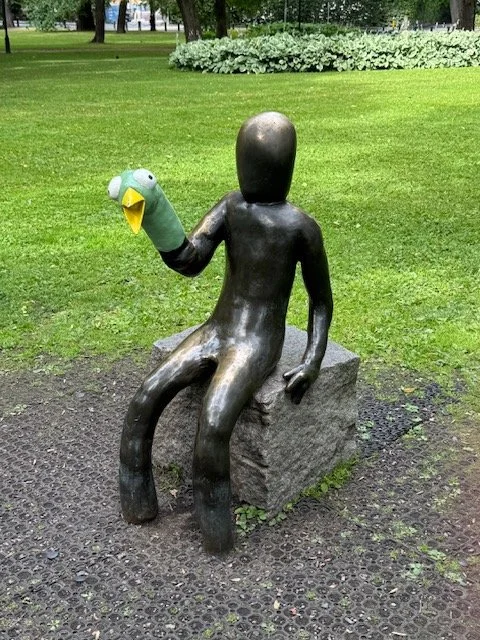
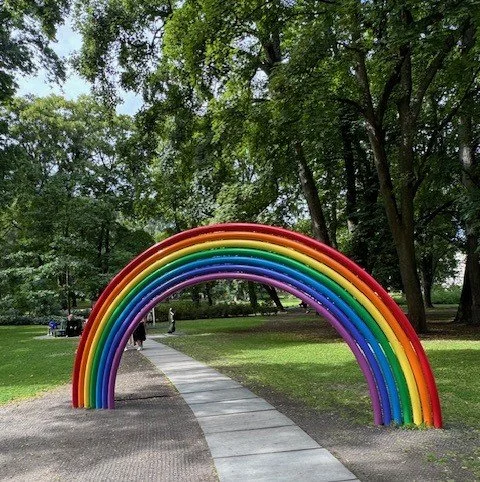
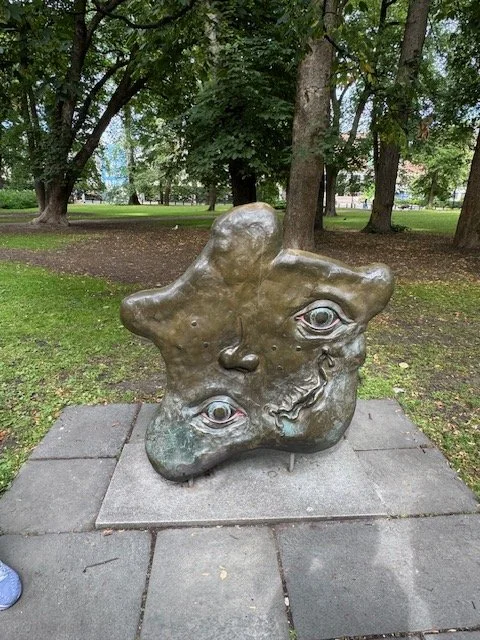
During the Park’s unveiling ceremony King Harald emphasized (Royals don’t “decree” in Norway) that the sculptures were “for you to touch and play with, and not just for decoration.”