Jakarta Bombing Victims--You Can Help!
Victims of the July 17th bombings at the Marriott and Ritz Carlton Hotels in Jakarta are still suffering. Many are still in the hospital--here in Jakarta, in Singapore, and some have returned to their home countries. Many, along with the physical and mental anguish they and their families are suffering, are additionally burdened by money worries. Even expats, gainfully employed and supposedly well-supported by company benefits, who were in those hotels-on company business-are encountering financial difficulties as costly medical treatments quickly gobble up their benefits. Word is that the Ritz and Marriott dare not offer monetary assistance to the victims or their families for to do so would be to admit culpability. Fortunately others have stepped up to help:
The British Chamber of Commerce has begun a fundraising campaign for the victims and families of the July 17 bombings. The money will be used where it is deemed most needed. Some will be used to assist with those receiving medical treatment for their injuries and some to help the families of the victims. One such example is the family of the Banquet Manager whose wife gave birth the day after he died in the bombing. If you would like to help this very worthy cause please contact bisnis@britcham.or.id
The Indonesian Netherlands Association in conjunction with CastleAsia have also launched a fund raising campaign for CastleAsia employee Max Boon who was severely injured in the bombings (For more about Max Boon see the Aug. 19,2009 posting). Max Boon lost both of his legs in the blast. Not only will he be permantely disabled, he also faces a long and difficult recovery and rehabilitation period. (And I have been told his insurance is, or has, run out.) If you would like to contribute towards his fund please contact: messagetomax@castleasia.com
While we may not be able to stop terrorists, we can help to alleviate the suffering they cause.
Info courtesy of WNJ (What’s New Jakarta) Newsletter 3/09/09
The Day the Rainbow Died
Make a wish/Have a ball/Dream a dream/Be it all…/If you want it, you can get it/But to get it, you’ve got to want it/Anything you want to try…../Just let go and you'll fly highhhhhhhh.../And Make a Wish!*
I’m making a wish. I am wishing, dreaming, hoping someone, or a lot of someones, realize how gray our world will be without rainbows—especially this rainbow, the Reading Rainbow…
On August 28th Reading Rainbow died. After 26 years of celebrating books Reading Rainbow is off the air.
Why in the world is Reading Rainbow—a program celebrating books and reading and ideas--going off the air?
“Because no one — not the station, not PBS, not the Corporation for Public Broadcasting — will put up the several hundred thousand dollars needed to renew the show's broadcast rights,” explained, John Grant, who is in charge of content at Reading Rainbow's home station.
What’s a few hundred thousand dollars in the grand scheme of things? Consider how much more than that we, the United States of America, spend on other things—war, for instance--wars against things like drugs, poverty, pollution, people...oh yeah, and illiteracy.
Grant noted that while the decision to end Reading Rainbow had to do with funding cuts to PBS, it “can also be traced back to a philosophical change about TV and reading. He says the change started with the Department of Education under the Bush administration, which wanted to see a much heavier focus on things like phonics and spelling, the basic tools of reading”….And PBS and CPB and the Department of Education want to put funding toward programming that would teach kids how to read. They think “teaching the mechanics of reading should be the network's priority.”
Silly me, I thought that was what teachers and parents were supposed to do…maybe that’s why funding for education is not of highest propriety…why pay teachers? Heck, let’s let TV teach our children “the mechanics of reading.”
Reading Rainbow is not and has never been about teaching children to read. Reading Rainbow does something more…something huge: “Reading Rainbow" Grant notes, “taught kids why to read, you know, the love of reading, encouraged kids to pick up a book and to read.”
We don’t seem to mind spending heaps of money to bully people into doing the “right thing.” So why not peel off some good old American greenbacks to do a really right thing: Bring back Reading Rainbow.
Better yet, skip PBS. PBS will go on to create other, wonderful programs—that’s what PBS does, provide “quality” programming for television viewers, programs like Sesame Street and Mister Rogers' Neighborhood, the only programs with longer runs on PBS than Reading Rainbow.
Let’s turn instead to those “for profit” TV program producers, the one who bring us “quality” TV shows packed with plenty worth learning to love: violence, rage, anger, slaughter, decapitation, blood, cussing, crime, crime, crime…
ABC, NBC, FX, CBS, Fox, HBO…why don’t YOU bring back Reading Rainbow?
Come on, use a couple of hundred thousand of those dollars you charge sponsors to air commercials for products they want us to buy—and buy us a program we want to watch—and want our children to watch. One that celebrates reading and imagination.
Butterfly in the sky/ I can go twice as high/Take a look/ it's in a book/ -- Reading Rainbow...
For the full NPR story go to: http://www.npr.org/templates/story/story.php?storyId=112312561
*Theme from “Make a Wish” with Tom Chapin, the 70's morning show that fostered my grand ideas.)
Earthquake! Gempa!
An earthquake, gempa, just hit Jakarta. It was a big one--basar sekali! I was sitting at my desk writing. First my vision started swirling and I felt myself swaying. The earthquake lasted a long time, long enough for me to wonder why I was dizzy? Why was my vision blurring? Hadn't I eaten enough? Was I getting sick? Then I heard clinking--glasses, bells or some metal--clanging, the walls creaked, the walls undulated. The pool water sloshed and splashed like a wave pool. I ran into the doorway. Called to Rusnati, "are you all right?" Yes, yes she was. She stood in her doorway and we looked at each other, pointed to flags waving, trees swaying, the Papua people teetering, the world wobbling.
"Call your house," I demanded, when it stopped. "Call your daughters. See if they are all right."
My phone rang then. Curtis. He was fine. His tall tall office building seemed fine. They had all run downstairs and outside. "You ran fast," I remarked. "It was a long earthquake," he replied.
It was a very very very long, rolling quake. Not one of those jerky, vicious ones that hit like a car smashing into a wall. We can only hope that means that everywhere it was felt the quake passed as gently as it did here.
An afternoon earthquake: one more reminder:
Love freely; live joyfully; play and sing with gusto! This is the time we have.
Doing the Hemingway
I read somewhere that Ernest Hemingway wrote 500 words day in and day out, "wife in and wife out." For years I have resisted imposing that kind of structure on myself. There have always been enough "have tos" and "must dos" in my life, I didn't feel I needed anymore. Forcing myself to write would take away the joy and leave me with just a job. But now I am rethinking my position. Talking Books by James Carter, is a collection of interviews with mostly British contemporary children's writers." The writers discuss their journey to becoming authors including schooling, favorite books, writing habits, family life, etc. etc. I keep the book in an orange metal magazine rack in the loo, along with other pick-up-and-put-down periodicals. One of my favorite interviews in the book is with Phillip Pullman. Each morning, Pullman he goes down to cluttered, filthy, messy garden shed "and generally write[s] three pages by lunchtime, always by hand." Pullman is very specific about the type of paper he writes on--never recycled because it's "too gritty and full of bits of twig and stuff." He selects a type of paper for "each particular book and it's got to be used for only that book and nothing else." He color codes the corner of each piece of paper: Subtle Knife's color was yellow; Northern Lights color was indigo.
John Cheever, the short story master, used to go downstairs to the boiler room of his apartment building, take off and put back on his suit and then return to his apartment, thus beginning his writing day. (I also recall reading that he wrote naked in the boiler room of his building.) I prefer the first scenario.
Cheerer's and Pullman's routines sound OCD, Hemingway's less so, until you consider that along with "wife in and wife out" he purportedly kept this 500 word commitment war in and war out, safaring, fishing, binging whatever. I prefer to think of it as ritualistic--like baseball players who don't change their socks during a winning streak or my daughter who kisses her fingers and touches the ceiling of the car whenever she goes through a yellow light--mindful.
"As a writer," Pullman says, "you have to write whether you've got ideas or not, whether or not you're feeling inspired. He notes that people who do not write talk "as if it all depended on inspiration" and the way they say it makes it seem as though they too could be writers if only this "mysterious inspiration" would strike them. "The trick is to write just as well when you're not feeling inspired as when you are" --Do the Hemingway.
Pullman believes that success in writing is due to three things: "talent, hard work and luck" and the "only one you have any control over is the hard work" --Do the Hemingway.
So I am rethinking my writing life. Maybe these rituals are good things. I ritualistically brush my teeth everyday--and put the cap back on; I eat breakfast, make coffee, make phone calls first thing every morning--day in and day out. Committing to write a certain number of words, pages, minutes could be a good for my writing life. And on some days, if I'm lucky, if I work hard--Doing the Hemingway-- inspiration will strike.
Ramadan Message
Ramadan has begun. Ramadan is the Islamic month of fasting. During Ramadan, from dawn to dusk, Muslims “refrain from eating, drinking, smoking, and indulging in anything that is in excess or ill-natured. Fasting is meant to teach the Muslim patience, modesty and spirituality. During Ramadan, Muslims ask forgiveness for past sins, pray for guidance and help in refraining from everyday evils, and try to purify themselves through self-restraint and good deeds” (Wikipedia). Ramadan is the 9th month of the Islamic calendar. The time of Ramadan is set by moons rather than a fixed date so it moves about 10 days forward each year. Because Jakarta is so close to the equator, the length between dawn and dusk does not vary much; dawn to dusk is always about 12 hours. In other parts of the world, however, the variance in the length of days varies greatly—from a few hours when Ramadan falls in winter up to 20 in summer. It is one thing to not eat or drink for 12 hours—many of us have done that—But 15? 18? 20? While working? And in the middle of summer????
“Refrain… from indulging in anything” includes thoughts, and here in predominately Muslim Jakarta, everyone is encouraged to do everything they can to help keep everyone else’s mind pure. This means do not speak, wear, or behave in anyway that might induce inappropriate thoughts in another; don’t let anyone see you eating or drinking because they might be tempted, or think about being tempted; don’t play music or programs that might stimulate inappropriate thoughts. This is a difficult task to charge anyone with—let alone an entire population.
The Indonesian Government takes charge of making sure everyone is “thinking right". Restaurants and night clubs—any place serving alcohol or encouraging “non-modest” activities such as drinking, dancing and karaoke are shut down for the first few days when “slips” might happen because people aren't used to being good, yet; hours of operation are restricted, too. Restaurants are not supposed to serve alcohol at all during Ramadan. Others, following the adage what you don’t see can’t hurt you, “sneak it” by serving wine and spirits in coffee cups. (As a concession to visitors/tourists after the first couple of days, hotels are excluded from this “no alcohol” policy.)
I can’t say how Ramadan is observed in other places; I can only speak for Jakarta. Each day, around 2 am, woman all over Jakarta wake up to prepare a meal. When it is ready, they rouse their families so they can eat before dawn prayers. Those with time before work and school, return to bed for a little extra shut eye. Everyone from the age of around 7 and up (excepting the ill and very old) try to fast. Exceptions are made for those who are traveling, fall ill, and women who are in their moon or pregnant.
Each evening at dusk, is buka puasa “break fast.” The day-long fast is usually broken by drinking fruit-flavored syrup mixed with water, or for some, real fruit juice, coconut juice, sweet tea, etc. Carts filled with bags of blue, red, pink, and orange sweet drinks and fruit line the busy streets ready to serve those who find themselves stuck in traffic at buka puasa. After dark, everyone celebrates. Families and friends hold buka puasa parties; they shoot off fireworks, dance, sing, make merry. As you might imagine, these festivities coupled with dehydration, fasting followed by bingeing, little and at best interrupted sleep, takes a toll. Everything: work, activities, production, expectations slow…gradually…comes…to…a…halt by Idul Fitri, when everyone who can returns to their villages for the end of Ramadan celebration.
What I admire about Ramadan is that at its heart, its core, Ramadan is about seeking forgiveness. It is a time of reflection, reconnection, recommitment to living mindfully. Prior to Ramadan, families gather at cemeteries to honor their ancestors, clean the graves and ask forgiveness. Co-workers seek out one another. “Mahon dan Maaf” they say, “forgive me and I’m sorry”— For anything I may have done or said to you, both know and unknown, “forgive me and I’m sorry.”
Whether we fast or not, whether we are Muslim or not, taking time to consider our actions, what effect they may have had and how they may have affected others seems like a worthwhile endeavor.
Mahon dan Maaf.
Dance Y'all, Dance is On Its Way!
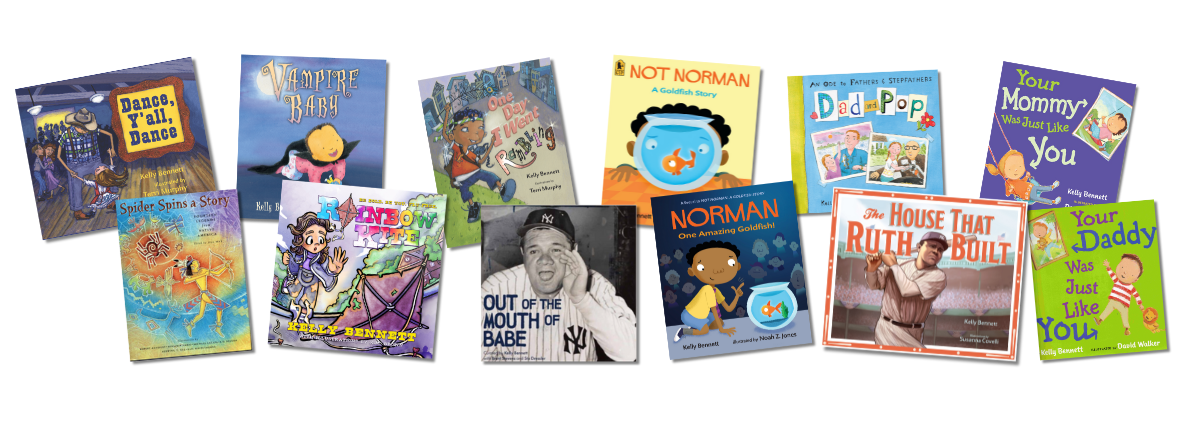
"Some one gave me a wonderful present... " I felt like singing when I opened my e-mail Saturday morning. The Galley's for Dance Y'all Dance, my soon to be released picture book from Bright Sky Press had arrived. It is a lively, two-steppin', swingin' and twirlin' dance hall romp. Illustrator Terri Murphy created lively art with fun characters, every page dances. She did a wonderful job of bring the story to life. Dance Y'all, Dance will be released this fall. Here is a peek at the cover.

Max Boon, SBY & Merah Putih: Messages of Hope
The Jakarta Globe published correspondence exchanged between Bombing victim Max Boon and Indonesian President Dr. Susilo Bambang Yodhoyono on the occasion of Indonesia's 64 year of Independence. Max Boon is a Dutch national and resident of Jakarta who was seriously wounded in the July 17th, Black Friday bombings. I have posted a PDF of the letters here: Boon and SBY Independence Day Letters This weekend a new Indonesian movie, Merah Putih, from the father and son team of Rob and Connor Allyn was released. Merah Putih, which means "Red-White", the colors of the Indonesian flag, was directed by Sugandi Yandi and is subtitled in English. The movie, set in 1947, is about "young Indonesian cadets who bond together despite their differences in religion, ethnicity, class and culture, to become guerrilla fighters for Indonesia's independence (Jakarta Post, Aug. 9, 2009)." It has the feel of those American black-and-white WWII movies we used to watch on weekend afternoons and late nights.
The film was inspired by "the real life experiences of the brave cadets massacred in Lengkong, and all the men and women who fought for a free and united Indonesia between 1945 and 1948." If the scenes depicted in the movie are true, and the violent, wonton massacres and deliberate destruction of property perpetrated by the Dutch soldiers really happened, then the relationship which exists today between the Dutch and Indonesians is truly a testament to the Indonesian's people’s warm hearts and forgiving spirits.
These letters between Boon and SBY, reaching me so soon after watching Merah Putih, made me hopeful. More hopeful that I have been since Black Friday. If after all the fighting, the killing, the destruction and oppression, Indonesians and Dutch Nationals have managed to reach the place Boon and SBY have—one of mutual respect and common humane goals (just as many other opponents from other wars have)— then one day, if we can manage to lift these children from poverty, if we can alleviate some of the suffering and hopelessness of poor families, if we can provide them a more hopeful future than that which comes from martyrdom, we have a chance.
As an aside, what is truly amazing and deserves to be emphasized with regards to Indonesia's fight for freedom is that the young people who came together from all over Indonesia did not share a common language. Yes, in 1945, along with Indonesian’s declaration of Independence from the Netherlands, the constitution stated that Bahasa Indonesia (bahasa means language) would be the official language. However, at that time, there was no clearly defined Bahasa Indonesia. People of each different region spoke different dialects and often completely different languages. If there was any common language it was Dutch, which was spoken by those who were either educated by or worked for the Dutch.
According to the Jakarta Post article, the idea for the film came after Rob Allyn (Don't know if that's the father or son) asked his friend, Hashim Djojohadikusumo, the owner of PT Media Desa Indonesia, about "two old portraits of Indonesian youths in uniform on his wall. Hashim told Allyn they were pictures of his two uncles, First Lt. R.M. Subianto Djojohadikusumo and Cadet R.M. Sujono Djojohadikusumo, who had died in the battle of Lengkong in 1946. Hashim's uncles were the brothers of Sumitro Djojohadikusumo, one of the founding fathers of Indonesia and the economic guru who helped win recognition of Indonesia's independence by the United Nations."
In 1945, after the Japanese surrender, the Dutch, recently liberated from the Nazi's, set about retaking control of Indonesia. After all, for around 300 years, Indonesia had belonged to them and they wanted it back. Many Indonesians wanted Independence strongly enough to fight for it. Intent on sharing the story of "brave young Indonesians willing to sacrifice their lives for the independence of Indonesia" with this younger generation of Indonesia - and to the world outside" the Allyns and Hashim set to researching and writing.
To know more about the movie: http://www.watchmoviesonlines.us/watch-merah-putih-2009-movie-online/
Indonesian Independence Day--Forecast Cloudy
August 17th is Indonesian Independence Day. This Monday marked its 64th year of Freedom. Here in Jakarta, Independence Day is an important holiday. The streets are festooned with Red and White banners and flags. Neighborhoods host block parties with food, games and competitions for the children. It’s like Fourth of July in the U.S.—minus the fireworks and potato salad—but with plenty of watermelon.
Jakarta definitely didn’t need fireworks or bombs bursting this year. We have had our share. Exactly one month ago, on July 17th, suicide bombers wreaked havoc in two Jakarta hotels, the Ritz and the Marriott. Employees and guest died in the blast, many others were injured and are still struggling to recover. We are all suffering and who knows when or how our world will recover?
On August 11th, it was officially announced that Noordin Top: Terrorist, martyr recruiter, horror organizing, terrorist, believed to have masterminded the Black Friday bombings, was not killed in the 18 hour-long shoot-out with police last weekend. Rather, the dead man-who does not deserve to be named here-was a florist at the Ritz Carlton Hotel. “It was ironic,” stated the What’s New Jakarta Newsletter of Aug 12th, “that someone who is capable of attempting mass murder was considered a funny and talented flower arranger by his colleagues.” I call it frightening.
As for the suicide bombers themselves: One has been identified as an “18 year old from a complex in Bogor” (a city near Jakarta). According to neighbors, this boy—a victim of Top’s particular brand of brainwashing—which includes the promise of heaven with virgins for the using and monetary payment and glory for the bomber’s families—was “described by neighbors as quiet and polite even though he came from a troubled home with his father imprisoned a year ago for robbery and his mother living in Kalimantan after a messy divorce.”
Who can celebrate freedom and independence when boys and girls are so trapped and hopeless they can be conned into believing in Top’s “ticket to heaven”? That their salvation comes in the form of explosives strapped to their backs?