
Don't Toss The Baby Out With the Bathwater!

I Googled these...what're Yours??
Happy 2017! It's a new dawn, a new day, a new calendar waiting to be filled with good intentions. Many of us--maybe you, definitely me--are making or have already made resolutions. Since one of mine (which I've already broken) is to be timely, you may already have your resolutions SET. IN. STONE.
If you're open to revision, get out your chisel and read on. If you, like me, having broken many year's worth of good Resolutions, haven't committed yet, read on.
A recent, informal survey revealed how most New Year's Resolutions are intended to break bad habits: Eat Better! Exercise More! Organize! Be More Loving! More Creative! BE More... Better...BETTER. . .
BETTER. BEST. That's what it's all about. Being "Better" or best, THE BEST. Before you go hog wild with the "Out with the old on with the new," while make this year's Resolutions, I'd like to inject one word of caution: BABY
“As in the adage ‘Don’t Toss The Baby Out With the Bathwater!’”
What the heck do babies and bathwater have to do with New Year's Resolutions? To answer that we'll need Mr. Peabody's to set his Time Capsule back to the 1500's.
Back then the term "running water" referred not to tap water, but to naturally running water, i.e. a river or stream. There were no spigots to fill a waiting tub. Instead buckets of water were lugged from a running water source, heated on a stove and then poured onto a tub. Then bathing commenced. Which ends, as you'll see in example #1, with Baby being the last one in the bathwater. At this point, there are two possible ways the baby could have been tossed:
1. Since lugging and heating bathwater was heavy, hard work, baths were infrequent and everyone in the family used the same water based on family rank: the man of the house had First Bath privileges, "followed by other sons and men, then the women and finally the children—last of all the babies. By then the water was so dirty you could actually lose someone in it—hence the saying, "Don't throw the baby out with the bath water."-via mentalfloss.com
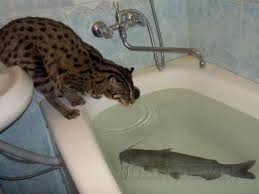
Yeah, if the "baby" is a catfish tossing it might be in order...
2. After bathing the baby, someone calls "Mother!" or "Woman!" or screams thus distracting Mom, so she tosses the tub of bathwater with the baby still inside.
Still wondering what baby bath water has to do with resolutions? Here's what:
Traditionally while making New Year's Resolution, we focus on the mucky bathwater and forget about our babies. (Thus New Year's Resolution time becomes "Beat The Crap Out Of Yourself Time".)
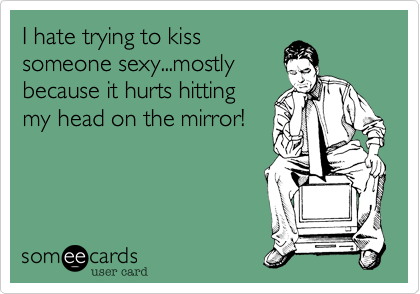
It's just past the holidays, the busiest time, the time following a long period of so much MERRY MAKING has totally trashed routine making it easy to think of a kazillion things we should resolve to do better.
WAIT! Before you go making that naughty list and checking it twice. Before you commit to any resolving what-so-ever. I challenge you to do yourself and everyone in your life a favor and make another list, FIRST.
On this First List, write down what you did RIGHT this past year. List everything RIGHT! . . . . OK Everything you DID. Every. Single. Thing. YOU ACCOMPLISHED.

Come on, Chick'n write the list!
THINGS I DID RIGHT LAST YEAR
1.
2.
3. I don't care how slovenly, lazy, messed up, OCD, ADD, RAP, MIA you might think you are, you did DO SOME THINGS right in 2016. (Assuming self-deprecation, I stopped at 3 in the example...This is your list, so LIST ON!)
Now--with this list of "babies" worth cuddling in plain sight--set your 2017 Resolutions. To be sure you don't throw your accomplishments out with the proverbial bathwater. Hug those babies! Embrace them. Celebrate them. If you're please with the way those things turned out. Put them on your new New Year's Resolution list FIRST! Because dang it, YOU DID GOOD!
2017 New Years's Resolution #1
Celebrate What You Did Right, First! and Do IT Again! Hooray Happy 2017!
Don't Toss the Baby Playlist:
- Something Good from Sound of Music
- Auld Lang Syne sung by Susan Boyle
- I Dreamed A Dream sung by Susan Boyle
Wanna keep in touch? Click on SUBSCRIBE to receive email notification of new posts on Kelly's Fishbowl.

who + what + how = a better world
Someone, sometime back told me the difference between an Optimist and a Pessimist's view of an event.
“An Optimist is never surprised and always disappointed. Whereas, a Pessimist is never disappointed and always surprised.”

That definition bugs the heck out of me. It makes being an Optimist feel like a sorry state of being. Why? Because of that word "Surprise."
Who doesn't love a surprise?
Who doesn't like to be surprised?
I can not tell you how many times I've pondered it, wondering if being one or the other is wiser. My conclusion: Even if I am sometimes disappointed, I would rather be optimistic. To that end, I'd like to share with you one of the most inspiring things I do for myself each day.
TED Talk
TED Talks are short--15ish minute long--presentations by dynamic doers, thinkers, speakers sharing ideas on a huge range of topics of global interest. Contrary to most other talking we hear, Ted Talks are informative, interesting and almost always positive. Those I have listened to feature people trying to make our world through science, social interaction, literature & art, better. I've listed a few of my favorites below. For a complete list of talks click here: TED Talk Topics
Parents, Teacher, Librarians:There are also TED Talks for Kids!
TED Talks are FREE!
You can watch TED Talks on your phone, Ipad, Computer, or listen to them on your commute (although I must mention that many include visuals worth seeing, so some things do get lost with audio-only.)
What is TED?
“TED is a global community, welcoming people from every discipline and culture who seek a deeper understanding of the world. We believe passionately in the power of ideas to change attitudes, lives and, ultimately, the world.”

Get this! There is even a TED Prize! (I just learned about this incredible Million Dollar prize!) "The TED Prize is awarded annually to a leader with a creative, bold wish to spark global change. By investing $1 million in a powerful idea every year, the TED Prize accelerates progress toward solving some of the world's most pressing problems."
YOU COULD WIN A TED PRIZE!
YOU COULD NOMINATE SOMEONE FOR A TED PRIZE!
Like me, YOU CAN LEARN HOW OPTIMISTS ARE WORKING TO MAKE OUR WORLD A BETTER PLACE.
“The heart of the TED Prize is the wish. It’s worth investing time to refine it and push it further. At its most basic, a wish is: who + what + how = a better world. Who are you going to engage? On what issue, and in what way? For what kind of impact?”

Winner of the 2017 TED Prize is Dr. Raj Panjabi, Founder and CEO of Last Mile Health, most notable for his work on the ebola virus. Dr. Panjabi's wish is to train locals to provide heathcare in remote communities. I couldn't find a TED Talk by Dr. Panjabi yet, but he will be revealing his plans for fulfilling his wish at a TED conference in April.
And, to hear past winners of the TED Prize and be inspired and excited by them and their WISH, click!
It begins with a Wish! Don't you love that? A Wish for our planet! A Wish for humanity! A Wish for a cure! For a solution! A Wish for the future!
That "difference" between Optimists and Pessimists noted above, might be true. Maybe Pessimists are surprised more often--surprised by what Optimists dare to WISH!
Cue Jiminy Cricket: "For when you wish upon a star your dreams come true..."
A Better World Playlist:
- Ryan Gravel, "How An Old Loop Of Railroad..."
- Elizabeth Gilbert, "Your Elusive Creative Genius."
- Shane Koyzcan, "To This Day...for the bullied and the beautiful."
- 31 Days of Ideas from TED
Wanna keep in touch? Click on SUBSCRIBE to receive email notification of new posts on Kelly's Fishbowl.

Need a Little Snappy Happy-Ever After, Too?

My hands-down favorite stick-in-my head musical number goes, "We need a little music/need a little laughter/need a little snappy happy-ever-after...
That's what I need right now, and I'm thinking with the news swirl and holidays upon us you do too. In truth, I didn't post last week because I couldn't think of anything Pollyanna-ish to say that didn't sound phoney-baloney.
(For those of you unfamiliar with the term "Pollyanna", according to my old-standard go-to, Merriam-Webster (since 1828), A "Pollyanna" is someone "irrepressibly optimistic who tends to find the good in everything.")
I first learned the term "Pollyanna" as the title of the Disney movie starring the embodiment of Pollyanna, Haley Mills (yes, I wanted to be her when I was little. And no, I was not her age when the movie came out--I saw it in reruns, too.) Longing for a feel good afternoon, treat yourself! Here's the Pollyanna trailer.
(Note: "Phoney-Baloney" is nonsense, foolishness, deceptive talk; a phoney-baloney is one who spouts such bull! The terms usage dates back to 1936. Pollyanna is no phoney-baloney!)
But wait, there's more! Feeling a bit like Kathryn Hepburn in Desk Set, I did some digging beyond the movie and whooppeee! Music to my writer's ears, turns out the term, Pollyanna, like Hayley Mill's character, came from a book!
“Origin and Etymology of pollyanna
Pollyanna, heroine of the novel Pollyanna (1913) by Eleanor Porter †1920 American fiction writer
First Known Use: 1921”

BTW: Pollyanna, was published in 1913, when Eleanor H. Porter was 44.
Pollyanna ranked eighth among best-selling novels in the United States during 1913, second during 1914, and fourth during 1915 (with 47 printings between 1915 and 1920).
Why would a "sappy" book about an orphan who always looking on the bright side have gained such popularity? Consider the times: World War One began July 28th, 1914...
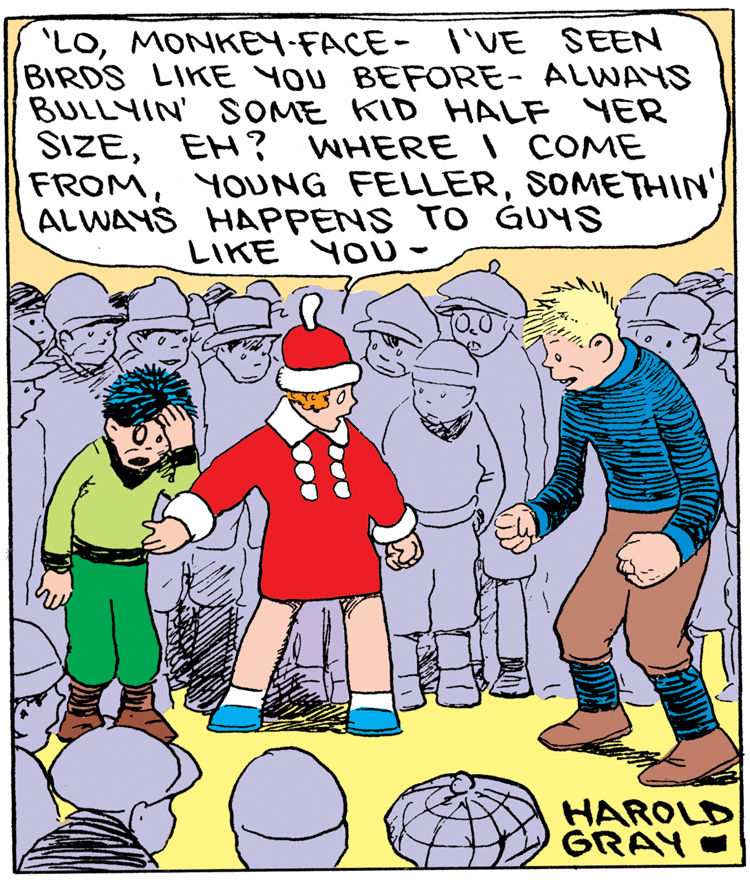
Another Pollyanna-ish Orphan bounced onto the scene in 1924. Harold Gray's comic strip heroine, Little Orphan Annie. What else was happening in 1924 U.S.?
- Johnny Weissmuller--Tarzan!--won three gold medals at the Paris Summer Olympics
- First Round The World Flight completed in 175 days by a Chicago based US Army Air Service team
- J. Edgar Hoover appointed Director of the Bureau of Investigation (FBI)
- Prohibition (1920-1933)

This is the cover of my "Annie" book.
Gray's Little Orphan Annie comic strip ran continuously through prohibition, the Depression, World War Two, the Korean Conflict, most of the Vietnam War and Cold War...even past Gray's death in 1968. (To be revived after Annie's Broadway debut in 1976.)
FYI: Gray's Orphan Annie was an original. He didn't conjure her, he kidnapped the little orphan from an 1885 poem. Here are the first few lines:
“LITTLE Orphant Annie ’s come to our house to stay,
An’ wash the cups and saucers up, an’ brush the crumbs away,
An’ shoo the chickens off the porch, an’ dust the hearth, an’ sweep,
An’ make the fire, an’ bake the bread, an’ earn her board-an’-keep;
An’ all us other children, when the supper things is done, 5
We set around the kitchen fire an’ has the mostest fun
A-list’nin’ to the witch-tales ’at Annie tells about,
An’ the Gobble-uns ’at gits you
Ef you
Don’t 10
Watch
Out!”
What to read more? Little Orphant Annie by James Witcomb Riley
What with all these Pollyannas, you might be asking? Historically speaking, what these Pollyanna's show me can be summed up in one paraphrase. When the going gets tough, Writers get writing. What do readers want? What does every Pollyanna ooze?
HEART! Miles and miles and miles of heart...
Or, to quote another Pollyanna, "Just a spoon full of sugar helps the medicine go down...."
Cause if we need a little snappy, everyone else might me craving one, too.
Need A Little Snappy Playlist:
- Need A Little Christmas from MAME!
- Tomorrow from Annie!
- Spoon Full of Sugar from Mary Poppins
- Ya Gotta Have Heart from Damn Yankees
Wanna keep in touch? Click on SUBSCRIBE to receive email notification of new posts on Kelly's Fishbowl

Those Long Dead White Dudes Did It . . .

Back in the beforetime, before short skirts or yoga pants. Before American woman had the “right” to vote, or own homes, or for that matter, ourselves, women were writing.
In fact, “Female journalists were among the first to record, comment on, and publicize the events leading up to the Revolutionary War,” noted curators of the National Women’s History Museum exhibit, “Women with a Deadline.” But . . . did those white dudes buying and reading the papers want to read what they had to say? Not so much.
“When Charlotte Bronte’s poetry received the feedback stating ‘literature cannot be the business of a woman's life’ from poet laureate Robert Southey, she changed her name—as did her sisters. Thus Charlotte, Anne & Emily became published authors, Currer, Acton and Ellis Bell.
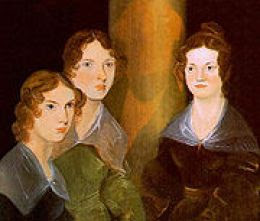
“Literature cannot be the business of a woman’s life”
Unlike the Bronte sisters, Ann Rule and Joanne Rowling, who published under male pseudonyms for publication (the Bronte's to fool the publisher; the others because the publisher hoped to fool readers), the decision for Mary Anne Evans, aka “George Eliot,” was completely her own. Or was it.
Evans used a pen named because she wanted to separate “Her own work from that of her peers, both in terms of genre and gender.” She made this decision after voicing her disgust of the romantic fluff female authors of the time wrote, in a “scathing essay ‘Silly Novels by Lady Novelists.’”
In light of Southey’s feedback to Charlotte Bronte, the question that begs asking is:
Were 19th Century women authors publishing “Silly Novels” because that was all they wrote?
Or was it because “Silly Novels” is what the male-dominated publishing industry felt women should write? . . . And read?

Cover of Godey's from Jan. 1857
At least one American male publisher, Reverend John Blake asked himself that same question. And in 1828 he answered it by inviting author Sarah Hale to edit The Ladies' Magazine.
In hopes that, as editor, she could “aid in the education of women, ‘not that they may usurp the situation, or encroach on the prerogatives of man; but that each individual may lend her aid to the intellectual and moral character of those within her sphere,” Hale served as, by the title she preferred “editress.” from 1828-1836 when it was acquired by Godey's.
Once the door was opened—and held open by that Long Dead White Dude and others like him—women poured into publishing. And while males still hold most of the journalism jobs according to a 2014 Washington Post article in response to Jill Abramson’s firing, “with 63.7 percent of the gigs, while women have 36.3 percent," that is not the case in all publishing.
Kekla Magoon noted in her April 2014 article, Vida VIDA Count: Children’s Literature: "Do Women Truly Dominate?"“All areas of Young Adult and children’s publishing is not only friendly to women writers—it is often considered to be female-led, since women occupy the majority of jobs in the industry, as authors, editors, agents and more.”
Back in beforetime, if Mary Anne, The Bronte Gals & Louisa May had gotten together, considering the demographics of publishing back then, I'm thinking their topic of concern would have been the same as that of today. Diversity does matter. Inclusion is necessary and important, and it totally sucks to be locked outside, wanting to join the party, knowing you have something valable to offer, and not being allowed in--or even on the invitation list!

Those long dead white dudes did it—for whatever reasons—and look how far we've come!
In the same way John Blake bucked the system by inviting Sarah Hale to become the first American female magazine editor, we can open our doors wider and reach out by inviting, encouraging & including diverse writers, artists, editors & readers.
Long Dead White Dudes Playlist:
Wanna keep in touch? Click on SUBSCRIBE to receive email notification of new posts on Kelly's Fishbowl.

Honor the Super Moon

Today, dawn to dawn, the moon will be closer to the earth than it has been since Jan 26, 1948 and will be again until 2034.
In honor of the Super Moon, I've put together a playlist to put you in the mood to moongaze.
If you're inspired to try to capture the moon take a tip from NASA Photographer, Bill Ingalls:
“1. Include landmarks in the picture
Make sure you put something in the same frame as the moon, perhaps a building or some other land-based object. Without any other object for reference, Ingalls said, the shot won’t stand out among the pack.
”It can be a local landmark, or anything to give your photo a sense of place,” he said. This will likely mean you’ll be shooting the moon while it’s closer to the horizon. This also works in your favor because the moon appears larger at the horizon; the reason for that phenomenon is a matter of debate”

Science Blurb: If you are wanting to do more than just gaze at the moon, click over to NASA's blog for the scoop on the Supermoon Phenom from Dr. James Garvin.
IN PRAISE OF THE SUPER MOON Playlist:
- Moonlight in Vermont by Willie Nelson
- Paper Moon sung by Ella Fitzgerald
- Silvery Moon sung by Doris Day & Gordon MacRae
- Moon Shadow by Cat Stevens
- Shine on Harvest Moon sung by Ethel Waters
- Moon Glow sung by Tony Bennett & KD Lang
- Harvest Moon by Neil Young
- Stardust Memories sung by Willie Nelson
- Dancin' in the Moonlight sung by King Harvest
- Bad Moon on the Rise (or as we sang it, "There's a bathroom on the right") by Creedence Clearwater Revival
- Major Tom by David Bowie
- Moondance by Van Morrison
- Moon Over Miami sung by Guy and Rayna
- Fly Me To The Moon sung by Frank Sinatra
Wanna keep in touch? Click on SUBSCRIBE to receive email notification of new posts on Kelly's Fishbowl.

Who’s Pres Isn’t Everything . . .
Buzz aside, who will be our 45th president might not be the most important item on our ballot (Especially considering the governmental stalemate we’re now experiencing.) So in case you're considering not voting...

Freak Out time is now! Next Tuesday, November 8, 2016, the 45th President of these United States, a new "Leader of the Free World", will be elected. Although most of the freaking being done is over which of the two primary candidates will win the presidential election, these are not the only 2 candidates on the ballot— 4 other candidates (and in some states more) are also running for President. What more, GASP . . .
Buzz aside, who will be our 45th president might not be the most important item on our ballot (Especially considering the governmental stalemate we’re now experiencing.)


What does matter is every other item: local, state & federal representatives, judges, propositions, issues, tax changes, initiative, etc.—on our Nov. 8th ballots!
So, in case you are one of those who are considering not voting because:
You don’t like either candidate . . .

You're too busy to vote . . .
Or, what difference does it make to you, really. . .
Consider this:
ONLY 6% of the population voted in that first U.S. Presidential election, held April 30, 1789. Popular as he was, did good ole’ George Washington represent the majority voice of this new nation? Heck no! In that first election, only 6% of the population voted because only “our Forefathers” i.e. White. Male. Landholders were allowed to vote.
- What Year Did Women Get the Right to Vote? 1920
- What Year Did Asians Get the Right to Vote? 1952
- What Year Did Native Americans Get the Right to Vote? 1957
- What Year Did African Americans Get the Right to Vote? 1965
- What Year Did Adults over 18 Get the Right to Vote? 1971
- What Year Did non-english speaking citizens Get the Right to Vote? 1975
- 1765: One Huge Reason “The Colonies” now the USA went to war with England? Taxation without Representation aka “The Stamp Act.”
- Here's more on our 341++ year-long fight for Voting Rights: US Voting Rights Timeline
Meanwhile, in other countries people are wishing for, fighting for, dying for the right to have a say in how they are governed. Don't Forfeit Yours!
Wanna keep in touch? Click on SUBSCRIBE to receive email notification of new posts on Kelly's Fishbowl.

Ban My Book…Please!!!

So proud to find Tom Birdseye's hysterical book on the list! Write on, Tom!
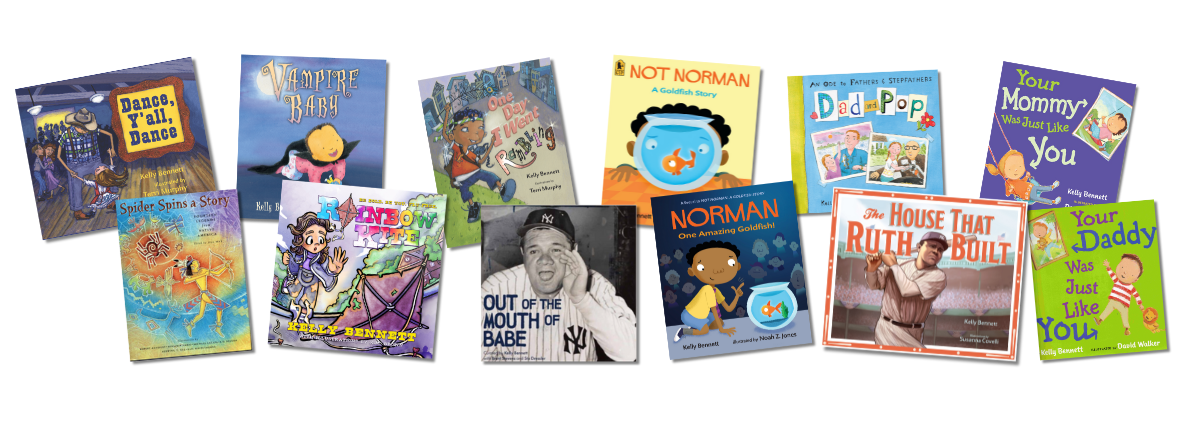
It’s hump day of Banned Book week. Yes, I know, traditionally “Hump Day” is Wednesday. But that’s based on a 5-day work week. I moved Hump Day to the 4.5th day for those of us who follow a 7-day/every-day work week). That settled, back to my rant. . I’ve been known to jest, “Ban my book, please…” (Especially after Vampire Baby and Not Norman were published.)

As the saying goes, “Most truth is said in jest.” True. But I wasn’t kidding. And I’m not now, either. With both of those books, Vampire Baby especially, what I found happened is that rather than buying and then banning it, parents, grandparents & librarians—yes librarians—school, public and private—ignore it, avoid it, don’t touch it, or read it… Ignore it and it will go away, they think and do.
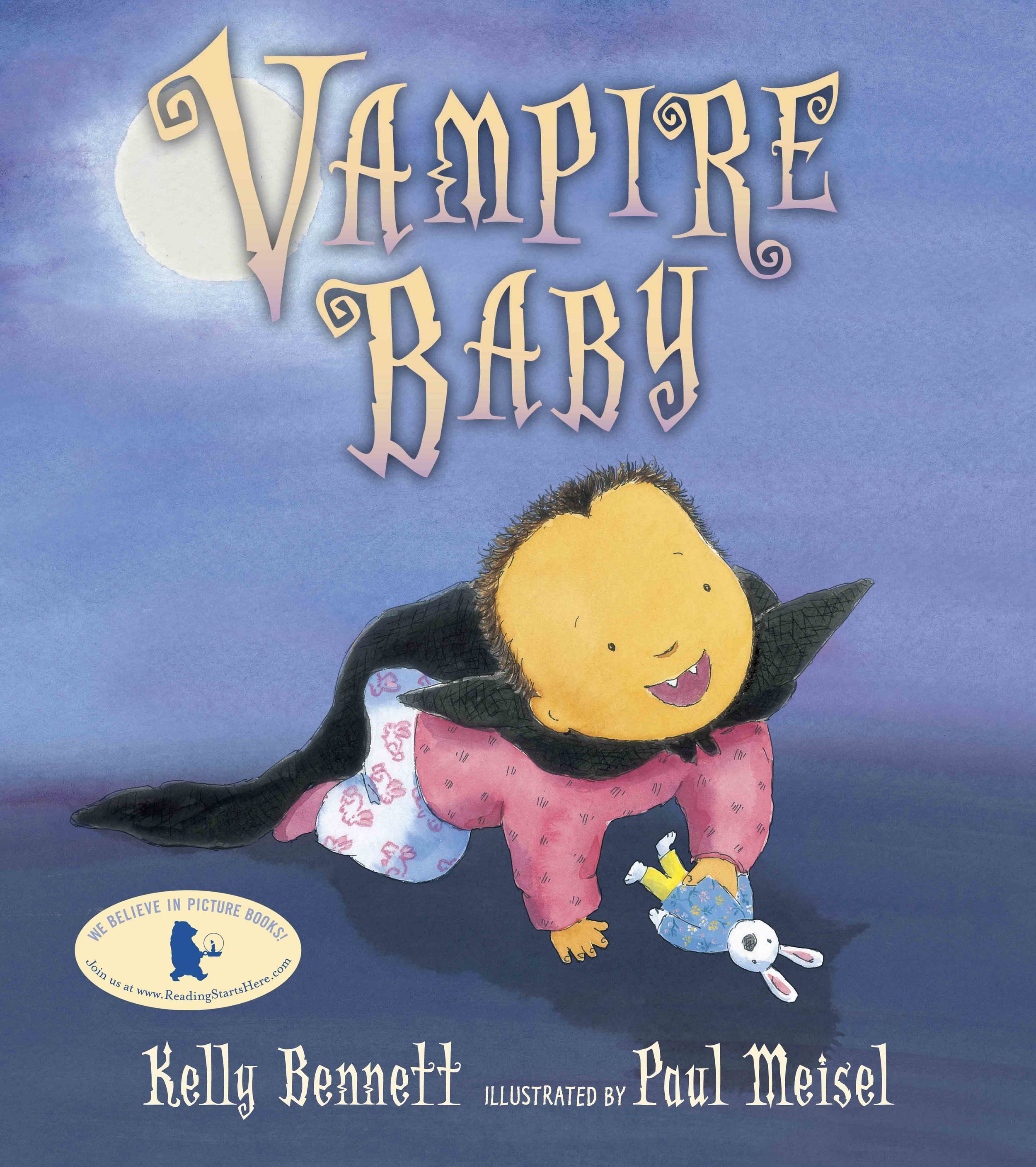
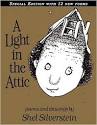
In the case of Vampire Baby, I was told it was because vampires are “taboo subjects” in many schools. At library/educator conventions, including TLA and IRA, I tried to explain to passing browsers how Vampire Baby isn’t really about a vampire. I tried to get the librarian or teacher to see for themselves: “Look at it! Touch it! Read for yourself, you’ll see…” They’d shake their heads or walk on by.


As for Not Norman, a Goldfish Story: Now it’s hugely popular & timely! People—adults, children, librarians—take one look at that adorable brown face peeking through the fishbowl with a goldfish for a nose and want to scoop it up. But back in 2005, when Not Norman was published, that was not the case.
I’d be at events & book signings, and many browsers, even “friends” who’d bought every other book I’d written offhand, skirted right past.
After all, that brown boy didn’t look anything like their children, grandchildren, students… Even still today this may happen. I can’t say for sure because I’ve banned those places.
Is being officially “Banned” bad? Yes. No one else should be able to take away our right to choose what we read.
…and No. At least. to be banned, someone has to care enough, be passionate enough, committed enough to go through all the trouble it takes to have a book officially banned. Truthfully, selfishly, I’d rather my book be banned than ignored…
“Books can be dangerous objects—under their influence, people start to wonder, dream, and think.”

However, This is Banned Book Week! and so:
In honor of all those individuals and institution that went to all the time, trouble and expense—I’m talking hours and hours, sometimes years of trouble, People!—to get a book banned, let’s:
READ! READ! READ! All the BANNED BOOKS!
Here, courtesy of ALA is a list of the Most Frequently Challenged Children’s Books:
And, to challenge your knowledge of banned and challenged books, the NYPL Banned Book Quiz
Happy reading!
Ban My Book…Please!!! Playlist:
Wanna keep in touch? Click on SUBSCRIBE to receive email notification of new posts on Kelly's Fishbowl.
The White Chick in the Room

I'm This Chick*
The children's lit world is a-buzz over diversity! Everybody’s talking about how we need diverse books and diverse writers (and to a lesser extent, diverse illustrators), and they should be . . . But nobody is talking about the white chick in the room—especially not the white Writer chick in the room. I’m that chick.
There are two parts to the diverse books issue. Both of which, as a reader, educator, grandmother & citizen I recognize. Neither of which—beyond letting my book buying dollars speak for me—am I in a position to do much about. And, both of which are making middle-aged, female, marshmallow ME want to pull back into the corner I crawled into as a child to read, and crawled out of when I became a writer.
Social Media is to bless . . . and to blame.
Back in my youth (the second half of the last century), writers—authors—were invisible. What we young readers focused on was the story: if a story was compelling, interesting, engaging we read it, and shared it. With the exception of a select few we studied in school, none of us knew who wrote the books we read. No one cared much either, except when it was time to check out a new book.
This anonymity was both good and bad. Lightly brushing the surface, on the bad side, anonymity was partially responsible for the gross stereotyping, misrepresentation, and historic inaccuracies in literature we are trying to correct by pushing to support diverse writers, artists and books.
On the good side, this pre-social media anonymity allowed this white chick writer to hide behind my words. I was the girl who, while learning cursive back when we used No. 2 pencils and were graded on spelling and punctuation, wrote as lightly as possible so my teachers would have a hard time reading what I wrote, or notice any mistakes. The girl who, used books as invisibility cloaks at home. The girl who wrote her feelings because I would have had the crap beaten out of me if I’d dared say what I was thinking. Children in our house were only supposed to do what we were told—quietly—and smile.
I loved to write, and teachers praised my writing. But, lacking confidence in my own stories, I found my voice by telling other people’s stories. I could be anything I wanted to be, and write about anything I wanted to—Poof! Use initials and I’m a man! A pseudonym and I’m an abused wife! An Indian—(with tribal approval)! A Cambodian! A boy! Poof! Poof! Poof!
YES! Those who cares about literacy, education, community—children—know: We absolutely do NEED diverse books. Children like—and deserve—to see themselves and their ancestors accurately reflected in stories; children learn about others by meeting them in stories.

For a better look and the explanation, click over to "Picture This"
The graphic above shows books published in 2015 (and represents 2016 percentages too, according to Associate Professor and author of the post "Picture This", Sarah Park Dahlen, author/teacher Molly Beth Griffin & illustrator, David Huyck , the trio responsible for recently updating graphic.)
A huge majority of newly published books for children, 73.3% depict white characters; 12.5% animals, trucks & others, and the whole rest of humankind depicted in a mere 14.2%, while according to Wikipedia, about 62.6% of Americans identify themselves as white. BTW: no figures were included for gender, religious, ableness diversity…Due cause for another chart?)
YES! We do need people of diverse backgrounds writing for our children! For the same reasons stated above and more. If every story was the same, who’d ever need to read, or hear—or buy—more than one? (And goodness knows, as a kid, I wanted to read about anything else but my boring old self.) This isn’t the reason no one is talking about the white chick the room. In truth, much of the Diversity Matters talking is being done by white chicks.
As Sarah Park Dahlen noted in her post unveiling the graphic, the Minnesota Children’s Lit community which supported this updating is, "comprised mainly of white authors, illustrators, and editors working to promote anti-biased and anti-racist children's literature, support writers and artists from underrepresented communities, and remove barriers to inclusivity." Similar groups are forming all over America, including WNDB, We Need Diverse Books, and my own VCFA’s Young Writer’s Network connecting authors with children in an effort to “raise a new generation of diverse writers.” (I can’t speak for the world efforts...)
Who better to tell diverse stories than diverse authors and illustrators? This is the diversity question that has everyone ignoring the white chicks in the room. But is it the question we should be asking? Really?
Blogger, Kevin D.Hendricks a “work-at-home dad [who] wrestles with faith, social justice & story", charted the books he’d read during 2014, and wrote about his findings in his Jan.8, 2015 post “Defining Diversity is Kind of Tough.” When explaining his findings, Hendricks noted, “Sometimes you don’t know an author’s or a character’s ethnicity," and went on to explain: "In this case I made my best guess and counted any book with a non-white author or primary character (I didn’t chart other kinds of diversity—gender, sexuality, disability, religion, etc.—just because it was getting complicated). I’m sure I’m off in places.”
“Defining diversity is kind of tough. Sometimes you don’t know an author’s or a character’s ethnicity.”
Writer Chick Me cringed when I read this. Not because Hendricks charted his booklist with an eye to reading more diverse stories. And not because he included authors (not illustrators, BTW) in the list. I cringed because he seemed disappointed that it was “kind of tough” sometimes to know an author's ethnicity from "the writing." Isn’t the goal of good writing for the author to be invisible?
Yes! Yes! Yes! Diversity in our literature, especially in our increasingly more global, changing, interconnected world does matter. We need to nurture and “support writers and artists from underrepresented communities, and remove barriers to inclusivity."
But does it have to be an OR situation? When it comes to writers & writing, should:
- WHO wrote the story matter to a reader sounding out her first books all-by-herself?
- WHO drew illustrations that sucked that child so deeply into that story he can’t even hear the TV matter, either?
- Should Diversity Matters mean AND?
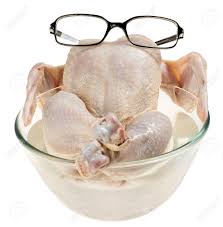
If it shouldn't, then where does that leave white, middle-aged, marshmallow writer chick me?
Right now, striped of my invisibility cloak, I'm feeling more like a plucked chicken: raw, exposed, maybe even a tad too close to my sell by date, than I am a chick. What are my stories to tell? . . . Animals? Trucks? Songs about Rainbows?
